
Why taking creatine is highly worthwhile.
Why taking creatine is highly worthwhile.
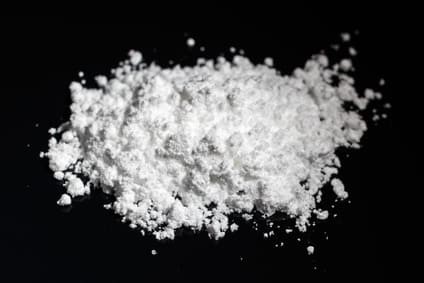
If you are generally interested in dietary supplements, you have surely come across the name creatine. It is a well-known and proven supplement that is valued by fitness and strength athletes. Taking creatine supports your muscle building, and you do not need to fear any serious side effects. You cannot absorb larger amounts of creatine for targeted muscle building through your diet at all. This fitness supplement is also tasteless and extremely inexpensive.
What exactly is creatine?
However, creatine has many other benefits that your health can profit from. Creatine is a chemical compound that the human body produces mainly in the liver and kidneys. The organism needs glycine, amino acids and arginine for this. Creatine is transported via the bloodstream to your muscles and into the brain, where it is stored as creatine phosphate. The latter is an essential chemical that the body needs to produce ATP (adenosine triphosphate). This in turn is responsible for ensuring that sufficient energy is stored in your muscles.
What effect does taking creatine have?
The way creatine works in your body is thus very versatile. For example, creatine is used as an auxiliary therapy for certain muscle diseases. Taking creatine ensures that in people who have had to lie down for a long time, the muscles do not decline too quickly. In strength training and bodybuilding, taking creatine can significantly increase your muscle mass, muscle performance and muscle strength.
ATP, however, only supplies enough training energy for a short time. Therefore creatine is primarily used for heavy and short-term loads on the muscles, during intense muscle training. Furthermore, taking creatine (creatine phosphate) improves your general nerve and brain performance as well as your hearing/vision and muscle functions. Your body could not carry out its various functions at all without creatine.
Why take creatine if the body can produce it itself?
If you eat a balanced and healthy diet, your body can produce roughly one gram of creatine per day itself. If you additionally take in about one gram of creatine through your diet with moderate meat consumption, you ultimately have about two grams of creatine per day available for intensive muscle training.
Your muscles can each store a maximum of four to five grams of creatine, however. If you wanted to fully load your creatine stores through food alone, you would have to eat at least one kilogram of pure meat or one and a half kilograms of fish every day. Creatine, on the other hand, is available in capsule and tablet form.
Taking creatine offers many health benefits
Creatine for performance enhancement and more energy: Because of its great benefit for supplying energy to the entire muscular system, creatine is widely used as a supplement by many athletes to achieve improved performance. Studies have shown that taking creatine can increase athletic performance by almost 15 percent. If your muscles have this additional energy, you can train more intensively and build your muscles further through more repetitions. The half-life of keratin is about three hours. As a supplement, you should therefore take creatine roughly 30 minutes before starting your training. This way you achieve an optimal effect for enhancing the performance of your muscular system.
Improving brain functions: Taking creatine not only serves to improve your fitness, but also has a positive effect on your brain activity. A study from Australia proved that taking creatine improved the capacity of the nervous system in a test group. These subjects, after taking creatine, were able to process information significantly faster and also showed a markedly better memory.
Taking creatine for testosterone deficiency and depression
Testosterone booster: Taking creatine has proven to be especially helpful for all men from their 30th birthday onwards. This means that the testosterone level in men slowly decreases from the beginning of this age. Taking creatine can replace the declining testosterone. In 2006, a study was published that showed that supplementing with creatine during a ten-week intensive strength training program significantly raised the testosterone levels of men. This was not the case for the other subjects.
Depression and creatine: The same positive effect that creatine shows in your fitness at the same time makes it an exceptionally effective antidepressant. According to a South Korean study with fifty severely depressed women, some received a proven antidepressant. Some additionally received a dose of creatine regularly, while others only received a placebo. In the second week, the women taking creatine reported highly positive results. Several tests proved that these women no longer had any symptoms of clinical depression. The placebo group did notice minor improvements, but also found that clinical depression still existed. How does this positive effect come about? Experts and scientists think that taking creatine increases ATP production in the brain, which alleviated the symptoms.
What benefits does creatine have for muscle building?
By taking creatine, on the one hand, the intramuscular creatine concentration increases by about 20 percent and the phosphocreatine concentration by about 25 percent. This gives you much better availability of your energy. As a result, you in turn need shorter recovery phases between your training sessions.
Taking creatine is also said to favourably influence the maximum tension development (isotonia) within your muscles. This means that after taking creatine supplements, for example, higher maximum weights are possible. According to scientific studies, this means a strength gain of up to 12 percent.
Muscle recovery with the help of taking creatine
Anti-aging through taking creatine: One aspect of aging in adults is sarcopenia, the loss of muscle mass. If muscle mass is lost to an increasing degree, the person can no longer move completely freely. Even simple activities such as getting up from a chair or hiking become problematic. Studies have shown that taking creatine brings about clear improvements in the musculature of women aged 58 to 71 within seven days.
This effect can also be increased if moderate strength training is carried out in addition. Canadian scientists tested women and men over 65 years of age who completed a strength training program. Some of the subjects were given creatine, while the others received a placebo. Ultimately, the study proved that the creatine group had built up twice as much muscle. Creatine is thus a versatile supplement that proves its benefits not only for athletes.
