What is your energy requirement?
Every person has a very specific energy or calorie requirement. The requirement can vary depending on body composition, gender, activity level and age.
The energy content of a food can be measured precisely through its heat of combustion and is expressed in calories. One kilocalorie (kcal) is the energy needed to heat 1 litre of water by 1˚ C.
To be able to control a person's food intake, or more precisely their energy requirement, you need to know the energy content (calorific value) of each nutrient:
- 1 g protein = 4.1 kcal = 17 kJ
- 1 g fat = 9.3 kcal = 39 kJ
- 1 g carbohydrates = 4.1 kcal = 17 kJ
- 1 g alcohol = 7.1 kcal = 30 kJ
- 1 kcal equals 4.1855 kJ (kilojoules) --> 1 kcal ~ 4.2 kJ
- 1 kJ equals 0.239 kcal --> 1 kJ ~ 0.24 kcal
Energy requirement
Your total daily energy requirement is made up of:
- the basal metabolic rate
- the work expenditure (muscle work)
- the leisure expenditure
- the thermogenesis after food intake
- the energy requirement for growth
The basal metabolic rate is the energy consumption of a person lying relaxed, namely exactly twelve hours after the last meal and at an ambient temperature of 20˚ C over a period of 24 hours.
The basal metabolic rate consists of 40% expenditure for maintaining brain, liver, heart, circulatory and kidney activity and breathing, and 60% heat production. The basal metabolic rate depends on age, gender, body surface area, hormonal factors, illness, proportion of muscle mass etc. A higher basal metabolic rate correlates closely with the size of the lean body mass (the more lean body mass, the higher the basal metabolic rate).
You can estimate the basal metabolic rate using the following formula:
- Women's basal metabolic rate (per day) = body weight in kg x 0.9 x 24
- Men's basal metabolic rate (per day) = body weight in kg x 24
Due to their greater muscle mass, men have a higher requirement of basal metabolic calories than women.
Thermogenesis refers to the conversion of food energy through combustion, which, among other things, produces heat. The degree of thermogenesis seems to be innate and hardly influenceable. In infants and children, the energy requirement can be relatively high due to growth.
Weight gain and overweight are the result of a positive energy balance. The body takes in more energy than it uses.
There are people who consume significantly more calories than corresponds to their weight and total energy expenditure, yet still maintain their ideal weight. Conversely, there are many obese or overweight people who keep their body weight constant or even increase it despite reduced food intake. If the daily energy requirement is exceeded, this surplus energy is not necessarily stored in fat deposits; instead the organism can get rid of it again through “extra burning”. The body thus protects itself from weight gain through increased thermogenesis.
Balanced eating and drinking
An important cornerstone of a healthy lifestyle is the ability to regulate tension and relaxation. Our everyday life is often marked by hustle and stress. That makes it all the more important to take conscious breaks to rest and recover. This can happen in many ways: spontaneously, systematically, through targeted relaxation measures, leisure activities, enough sleep, physical activity, socialising together etc.
Balanced diet
Three balanced main meals (breakfast, lunch and dinner) regularly supply the body with the energy it needs. This traditional meal rhythm can be adapted to your appetite and personal habits. For example, one main meal can be replaced by one or two smaller meals. Or the main meals can be supplemented with snacks (in the morning, afternoon or evening). These provide a small energy boost when the time between meals is very long. They prevent intense hunger attacks and offer an additional way to make your diet varied. Everyone has to find their own rhythm, but above all you should avoid constantly nibbling on something.
Pause what you are doing, sit down comfortably and take the time to enjoy your food in peace. These principles also apply to meals outside the home. This way the break becomes more restful and you eat more mindfully, noticing the feeling of fullness better.
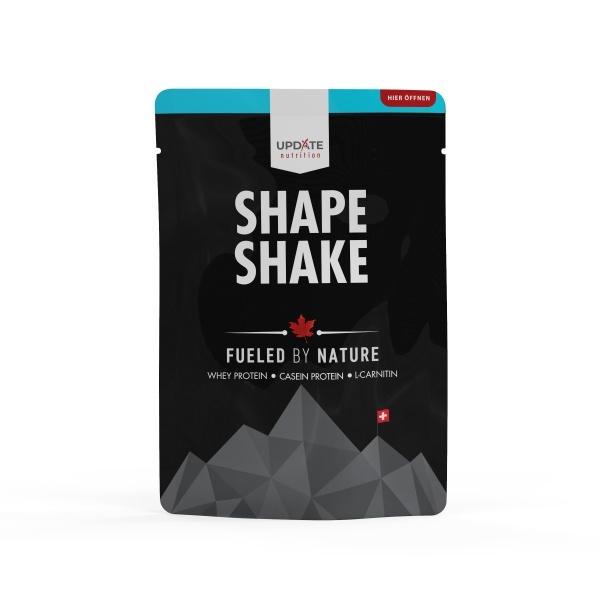
To reduce your energy intake, the Shape Shake in the update Shop is very well suited: