
The "king of exercises" bench press. Is it really as effective for chest training as most people think?
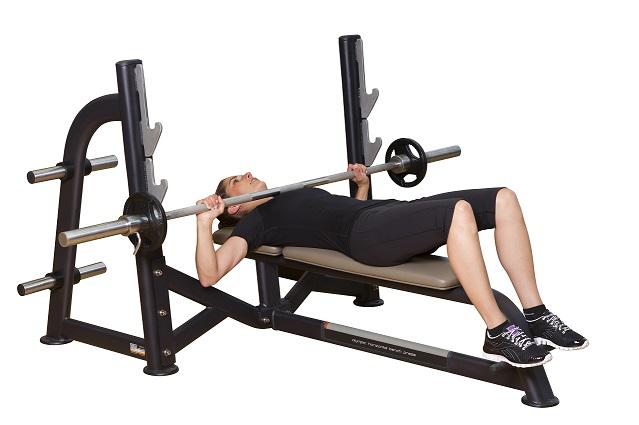
The bench press is often called one of the king exercises. Most people describe it as a highly effective move, supposedly the "best" way to train your chest.
In this article, you'll find out whether that's really true.
Single-joint vs. multi-joint
The bench press is a multi-joint exercise. In multi-joint exercises, the movement happens across several joints (e.g. the knee and hip joints). These recruit the muscles of a muscle sling at the same time. Unfortunately, the different muscles in that muscle sling each have different strength curves. This is because multi-joint exercises apply an almost straight-line (linear) force and therefore don't direct resistance as precisely as single-joint exercises do. The advantage of multi-joint exercises is the so-called spreading effect (an indirect training effect). This effect describes the observed strength gain in the surrounding muscles that aren't directly trained when you work large muscle groups, even though those structures never reach full fatigue.
The barbell used in the bench press provides linear resistance. This means the training load stays the same from the starting position right through to the end position. On training machines with a cam ("eccentric wheel"), the resistance constantly changes, in line with the ever-changing distance between the pivot point and the point where the weight is applied.
ROM
Another drawback of the bench press is that you can't train through the full range of motion, because the bar's movement is limited once it rests on your chest.
Hormone release
The bench press is often linked to hormone release during the exercise. However, this plays no role when it comes to muscle hypertrophy. Muscle hypertrophy is a local process that happens independently of the release of so-called "anabolic hormones" after training, as long as hormone concentrations stay within the permissive range. Whether you train your chest muscles on their own or together with your legs makes no real difference to chest muscle growth.
So remember:
The primary goal of muscle training is to direct as much of the external resistance as possible onto the muscle you're training. This is the opposite of sports where, for the sake of demonstrating strength (physical work), the resistance has to be spread across as many muscles as possible. The more isolated the training resistance is on the target muscle, the greater the muscular load. What ultimately matters is total muscle exhaustion (the fatigue index of the largest motor units). When you bench press without a training partner, you always have to finish the exercise concentrically, which means total muscle exhaustion isn't possible.
| Advantages of the bench press | Disadvantages of the bench press |
|---|---|
| - Small weight increments | - Risk of incorrect technique |
| - Improves intermuscular coordination | - Doesn't offer variable resistance |
| - Trains the stabilising muscles | - Can't be trained through the full ROM |
| - Improves balance | - The exercise has to be finished concentrically |
