
What Is Creatine and What Does Supplementation Do?
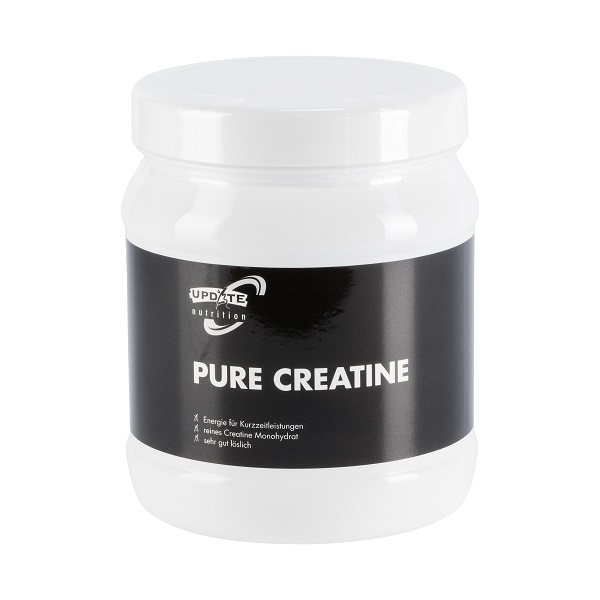
Creatine is a nitrogen compound, made mainly in the liver and kidneys from the amino acids glycine, arginine and methionine, that the body produces (synthesises) itself. However, creatine is also absorbed through food: fish and meat contain around 0.5 g of creatine per 100 g of food. Milk contains traces of creatine. The Swiss Federal Office of Public Health (FOPH) approved creatine as a food supplement in 1995.
In most cases, creatine monohydrate is used for creatine supplementation, as it is the most common and best-researched form of creatine.
Metabolism, function, general effect
The total creatine content in the body of a 70 kg athlete is around 120 g, of which about 95% is stored in the skeletal muscles. Around 2 g are broken down daily and excreted in the urine as creatinine. During creatine intake – even at low doses – an increased ratio of creatine to creatinine can be detected in the urine. The loss is replaced by the body's own synthesis and by intake through food. A virtually creatine-free diet, as followed by vegetarians, does not lead to deficiency symptoms, although people who regularly eat meat and fish have creatine stores around 10% higher than vegetarians.
In combination with phosphate, creatine performs several important functions in supplying energy to the muscle. Its best-known role is providing phosphate for the resynthesis of the energy carrier ATP (adenosine triphosphate) from ADP (adenosine diphosphate). Fast muscle fibres (type II) contain creatine in higher concentrations than slow muscle fibres (type I).
Use and dosage
In principle, two different loading protocols are distinguished: with fast loading, maximum creatine levels in the muscle are reached more quickly than with slow loading. However, the maximum creatine level is the same with both methods. With fast loading, 0.3 g per kg of body weight (BW) is taken daily, split into around 4-5 individual doses. The loading phase lasts 5 days. In the maintenance phase that follows, 3 to 5 grams of creatine are taken per day. The maintenance phase lasts 4 to 12 weeks. This should then be followed by a break of several weeks (the discontinuation phase, around 4 weeks or longer). With slow loading, the same amount of creatine - or only slightly more - is taken during the loading phase as during the maintenance phase, but over a longer period (around 4 weeks). The maintenance phase and discontinuation phase then follow, as with fast loading.
Creatine supplementation makes sense above all if you already have experience with strength training and are able to place an adequately supra-threshold stimulus on the muscles during training. In that case, creatine can support muscle building and lead to an increase in strength.
Creatine supplementation is generally not recommended for adolescents.
Possible side effects
During the loading phase, creatine leads to a weight gain of 0.5 - 1.0 kg, as creatine osmotically "draws" water into the cells, causing short-term water retention in the muscle cells.
Depending on individual reaction, further weight gain is possible in the long term (over months to years).
Although isolated cases of muscle cramps and strains, tendon problems or gastrointestinal intolerance have been described in connection with creatine intake, no scientific studies have so far confirmed these side effects.
People with existing kidney conditions, or people with an increased risk of kidney disease (e.g. diabetes, high blood pressure), are advised against taking creatine. In healthy people, current knowledge suggests that kidney function is not impaired.
