
Unstable surfaces in strength training – with unstable results?
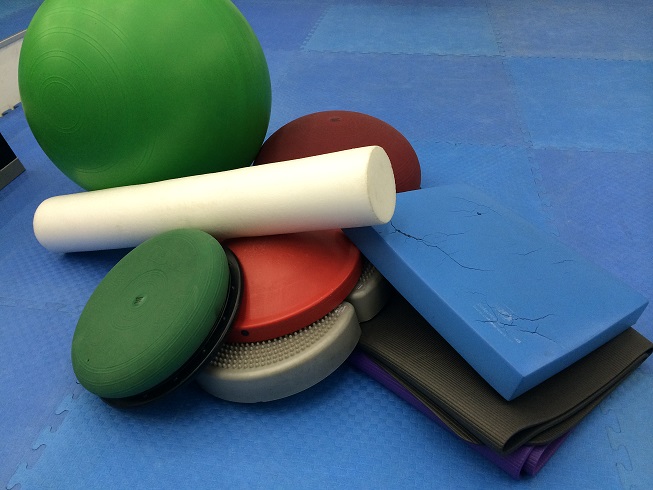
In gyms these days, you can increasingly see people training on all kinds of unstable surfaces.
Strength exercises are often combined and blended with balance and coordination exercises.
But what effect does combining these two forms of training actually have?
If you want to build strength, heavy training loads are the basic requirement. When you use unstable surfaces, however, the training weights often have to be reduced considerably so that the relatively complex movement of the exercise can still be performed with correct form. The exercise becomes harder because of the instability, but the forces acting on the muscle are too low to stimulate any muscular adaptation.
The difficulty of wobbly, complex exercises lies mainly on the sensorimotor level, where your individual coordination skills are called on alongside a minimum level of strength. It's worth noting here that many variations are possible within a given exercise, so each one requires its own specific movement pattern.
Combining strength training with coordination or balance training, at a correspondingly low training load, inevitably prevents maximum muscular exhaustion and so limits the exercise's ability to deliver an adequate muscular training stimulus.
When should I use unstable surfaces?

The question of whether to use unstable surfaces comes down to your personal training goal. Within a single session, your training goal might be strength, endurance, flexibility, coordination or relaxation.
If you want to improve your strength, unstable surfaces aren't the first choice.
If your training goal is to improve coordination skills such as balance, unstable surfaces are a suitable training tool.
Source: body LIFE Swiss 2 2014
