
Whey protein. Why is protein powder so healthy?

Whey protein - why is protein powder so healthy?
Protein powders are dietary supplements that athletes consider essential for building muscle and that are meant to ensure that when losing weight, not only fat is broken down but, as an unwanted side effect, muscle is also lost. Whey protein, also known as whey protein concentrate or whey protein isolate, is considered particularly healthy and is said to have a high biological value. But what is behind this?
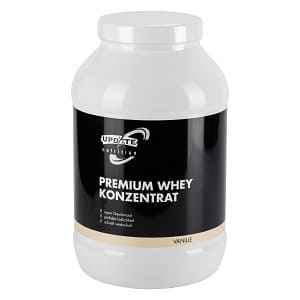
What exactly is whey protein?
Whey is produced when making quark or cheese and is obtained from curdled milk. You can easily recognise whey by its greenish-yellow colour. The consistency is watery, as whey is 94% water. The components that athletes want in protein powder make up only 0.6 to 1% of it. But these 0.6% have a lot to offer, because they contain the nine essential amino acids histidine, isoleucine, leucine, lysine, methionine, phenylalanine, threonine, tryptophan and valine.
The human body is not able to produce these amino acids itself. It depends on them being taken in through food.
In the production of whey protein powder, calorie sources such as sugar and fats are mainly removed, so that whey protein concentrate or whey protein isolate contains hardly any calories. The question often arises whether it would be enough for muscle building to simply eat healthily to get all the important nutrients, instead of taking an industrially produced protein powder.
Without doubt, some foods such as cheese and especially ricotta contain a sufficient amount of whey protein. In contrast to protein powder, however, these foods have one disadvantage: they often contain a lot of fat and sugar. The calorie content is therefore not to be underestimated, and these foods should be consumed only in moderation by everyone. For this reason, protein powder is preferable to certain foods, especially when dieting.
By the way, if you are lactose intolerant, whey protein powder is not a problem either, at least if it is whey protein isolate. Because lactose is removed from the whey protein during the production of the protein powder, there should be no problems for lactose-intolerant people. However, whey protein concentrate should be avoided if you have a lactose intolerance.
High biological value
Whey protein generally has a very high biological value. The biological value indicates how efficiently the body can convert proteins from food into its own proteins. A decisive role is played by how many essential amino acids are contained. The more similar the proteins from food are to the proteins in the body, the better the body can utilise them.
The body finds it easier to utilise animal protein than plant protein, because the composition of animal proteins is more similar to that in the body.
An egg, for example, has a biological value of 100 and serves as the reference value for all other foods. Only whey protein, with a value of 104, is above the egg.
When whey protein is processed into protein powder, the body can also utilise it very quickly. Thanks to the fine molecules of the protein powder, the protein is quickly absorbed from the intestine and reaches the muscles rapidly. It is not for nothing that whey protein is called an anabolic or fast protein.
How the body benefits from whey protein
Primarily, it is the muscles that benefit from protein powder. But whey protein can support the body in many different ways and shows how healthy protein powder can be.
For example, whey protein has the ability to protect your body cells from free radicals. Many people do not know that free radicals are responsible for ageing. These highly reactive radicals attack healthy body cells and damage them. The consequences are slack skin, impaired blood flow in the veins and even damage to DNA. Cancer or tumours can be possible consequences.
Antioxidants, however, are able to capture the radicals. Glutathione, a protein, is a particularly effective free radical scavenger. Your body can produce this protein itself, but for that it needs the amino acid cysteine. No other food contains anywhere near as much of this amino acid as whey protein does. Protein powder can therefore positively influence your biological age and keep you fit and healthy.
Protein powder can also make you happy. Whey protein contains a lot of tryptophan. This amino acid has the ability to boost the production of serotonin. Serotonin is considered THE happiness hormone, and a deficiency can lead to depression. If it is present in sufficient amounts, it can contribute to balance, restful sleep and better performance.
Whey protein isolate or whey protein concentrate - which is better?
When buying protein powder, many athletes wonder whether they should choose a whey protein concentrate or rather a whey protein isolate. Yet most people do not know the difference between the two products.
Whey protein comes in different forms, which can arise during the processing of whey into protein powder. The three different protein powder forms obtained from whey protein are divided into different quality grades and differ mainly in their production process.
Whey protein concentrate has a protein content of 70 to 80%. The share of carbohydrates in this protein powder is 6 to 8%, with a fat content of about 4 to 7%. That is clearly higher than in whey protein isolate protein powder. However, whey protein concentrate has the advantage that it is significantly cheaper than whey protein isolate. The reason for this is the simpler production. If you have intolerances to fat or milk sugar, problems can arise with whey protein concentrate, and the calorie content of this protein powder should also not be neglected.
The more expensive variant is whey protein isolate. Its protein content is 90 to 96%. Through a complex production process called microfiltration, fat and lactose are removed from the whey protein, so that the carbohydrate content of whey protein isolate is only 1%.
Whey protein concentrate is just as recommendable as whey protein isolate. The slightly lower protein content and the somewhat higher calorie content, which nevertheless stays within a reasonable range, should merely be kept in mind when taking it. For recreational athletes, whey protein concentrate is generally entirely sufficient.
