
Can You Train Your Muscles to Grow Longer, and How Do You Trigger It?

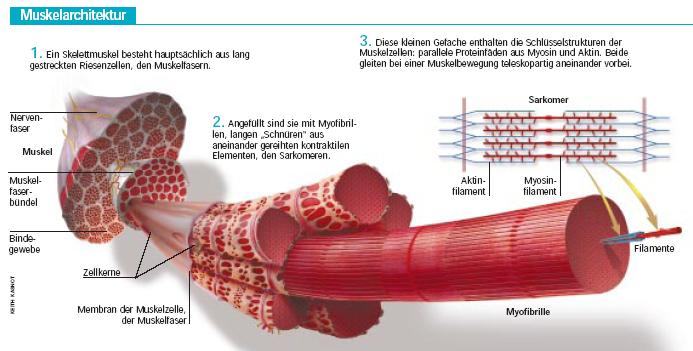
In general, muscles (or muscle fibres) can pursue 3 strategies to adapt to changing functional demands: an increase or decrease in length, an increase or decrease in physiological cross-section, and contractile and metabolic reprogramming. Below, we'll only look at the increase or decrease in length: myofibrils can lengthen either actively or passively. Active means the lengthening happens during simultaneous contraction (the muscle is activated and produces force). Muscle contraction while the muscle is lengthening is called "eccentric" contraction. Passive means the change in length happens without contraction (e.g. through contraction of the antagonists). Unlike lengthening, myofibrils can only be shortened actively ("concentric contraction"). It has long been known that muscles can adapt to a new functional length by adding or removing new sarcomeres in series at the ends of myofibrils. Contractions that aren't carried out through the full ROM (at a short muscle length) lead to a decrease in the number of sarcomeres in series. Eccentric training (contractions while the muscle is lengthening) leads to an increase in the number of sarcomeres in series, as long as the exercise is carried out beyond your everyday range of motion.
The effect of regulating the number of sarcomeres in series is to adjust the distance over which the muscle can contract, and to adjust the optimal sarcomere length at which the muscle can produce its maximum force (see the blog on the force-length relationship). If a muscle is immobilised in a shortened position, the number of sarcomeres decreases. The remaining sarcomeres are set to a length that offers optimal conditions for developing maximum force in the now-shortened state. As already mentioned, contraction at a long muscle length (longer than usual) leads to an increase in the number of sarcomeres arranged in series. As a result, at a given muscle length, the average sarcomere length is shorter.
Another consequence of modulating the number of sarcomeres in series is a change in the maximum unloaded shortening velocity of the muscle fibres (see the blog on the velocity-force relationship). The maximum unloaded muscular contraction velocity depends on the sarcomere length, the number of available actin-myosin cross-bridges in series, and the type of these cross-bridges. For the maximum loaded contraction velocity, however, the number of available actin-myosin cross-bridges arranged in parallel is also decisive (radial hypertrophy). The more sarcomeres there are in series, the faster the potential shortening velocity of the muscle fibre. For example, adding sarcomeres in series as a result of contractions at a long muscle length should increase the maximum shortening velocity of the muscle fibres.
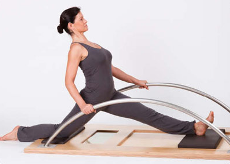
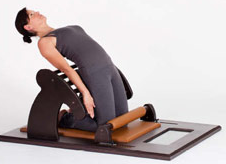
To maintain or increase the functional ROM by controlling the number of sarcomeres in series, muscle training that includes contractions through the greatest possible joint range therefore seems to be the method of choice. Here, the relevant muscles can also be loaded with resistance in a targeted way through the full range of motion. For some muscle groups (e.g. the chest muscle, calf muscle, hamstrings), this is very achievable with strength exercises (e.g. butterfly, calf raise machine, Romanian deadlifts, etc.). Some muscles (e.g. the rectus abdominis and hip flexor), however, can't be loaded through the full range of motion during a strength exercise. That's why we recommend training these muscle groups specifically for length using fle.xx equipment.
Sources: Determinants of molecular and cellular skeletal muscle adaptation relevant to training, part 1: introduction and length adaptation, Dr. sc. nat. Marco Toigo
