
HMB – The Effect on Muscle Building and Fat Loss
HMB - useful for fat loss and muscle building?
Fat loss and muscle building are goals that play an important role for health. However, they are also much-debated topics in the world of sport. After all, too much fat (high blood lipid levels) as well as too little muscle mass are not signs of a healthy, high-performing body. What does HMB (hydroxymethylbutyrate) do as a dietary supplement to support fat loss and muscle building?
What exactly is HMB, and where does the substance come from?
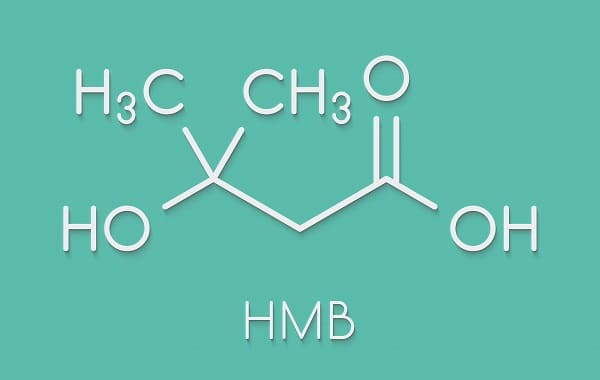
Chemically speaking, HMB is a derivative (metabolic breakdown product) of the amino acid leucine. In the human body, about 0.3 mg of HMB is produced daily from leucine with an average diet. To produce energy for the muscles, e.g. during sporting performance, many nutrients are used up. For example, an increased need for cholesterol is also observed. Leucine is needed to gain energy, and when it is metabolised, HMB is left over. However, only about 5% of the leucine taken in with food is oxidised to HMB.
Anabolic, catabolic and anti-catabolic
When it comes to HMB, fat loss or muscle building, some other terms come up that partly play a role here. You often read about anabolic, anti-catabolic or catabolic.
Anabolic can be translated well as building up. It means the building up of substances in the body, such as filling up stores of protein, fat and carbohydrates (gluconeogenesis). The negative connotation came from anabolic substances such as testosterone, which is well known as a synthetically produced doping agent for muscle building.
Catabolic means something like loss of strength, i.e. breakdown processes taking place in the body. These include, for example, processes that serve to gain energy from the protein, fat and carbohydrate stores of our organism. Examples include the breakdown of glycogen (carbohydrates) and the metabolising of body fat (cholesterol, triglycerides).
Anti-catabolic refers to an effect against catabolic processes, i.e. a kind of brake on such processes.
How does muscle building actually work?
As you probably know, our musculature is made up of individual muscle fibres. Several of these fibres form a muscle fibre bundle. Muscle fibres are practically the muscle cells. Unlike other body cells, however, muscle cells cannot divide. According to current knowledge, the fibres of an injured or destroyed muscle therefore cannot regrow either.
Muscle training, i.e. specific physical stress, leads to a thickening of the muscle fibres. You may know this increase in muscle mass under the term muscle hypertrophy. Proteins stored in the muscle cells are responsible for this phenomenon. That is why you should also give your body additional protein during training and strength training. These proteins are then available to your body for building up the musculature.
If you want a muscular, well-trained body, you need to try to promote muscle building. However, this only works with muscle training. When mechanical stress on the musculature exceeds a certain level, the muscle cells react with physiological changes. Muscle building brings you not only a good appearance but also health benefits. For example, better blood circulation, an increased energy consumption due to a higher basal metabolic rate, prevention of osteoporosis, more strength. Muscle building is always worth it!
HMB - what do experiences and study results show?
Since 1996, numerous studies have been run internationally on HMB, muscle building, fat loss and possible effects and side effects. Different test subjects, trained and untrained people, were included in the various studies. Unfortunately, the study designs and observed types of training were sometimes very different, and the duration of the studies was relatively short.
So scientists do not yet fully agree on the actual effects and side effects of HMB. One advantage of HMB is definitely its strength in slowing down the breakdown of muscle tissue. In this way, muscle damage that could arise from intensive training may possibly be better avoided. Compared with the original substance leucine, HMB is considered the stronger one at reducing muscle breakdown. However, this has also not been conclusively clarified. HMB is rated weaker at stimulating muscle protein synthesis. Various indications suggest that HMB could also influence fat burning and thus fat loss.
According to new data, HMB as a dietary supplement could achieve particularly good effects in people who are undertrained.
So far, no particular side effects have occurred in the studies or according to general experience with taking HMB. Study experience also suggests that HMB as a free acid, e.g. before a training session, is significantly more effective than an HBM calcium salt. In this case, it should be taken 30-45 minutes before the workout.
HMB alone will not help you build huge muscles. Reaching the daily protein intake amounts seems to be much more important. Spreading the intake over every 3-5 hours is considered optimal based on current data. The optimal portion size is about 20 g of protein. Higher doses do not produce better results (in young healthy adults), while lower doses may make the effect somewhat smaller.
