
Fit and healthy into old age – The hidden sides of the muscles

Our muscles are usually only noticeably perceived when we have stressed them unusually and muscle soreness makes itself felt as a result. Yet they deserve special care, because they can do far more than we generally realise. How and to what extent the muscles influence our whole life, and how we keep them fit for a lifetime, is explained by Dr. sc. nat. Marco Toigo.
From around the age of forty to fifty, muscle mass decreases in untrained people. The loss of muscle mass, or a muscle mass that is too low, can endanger health. It is generally known that the loss of muscle mass and performance in old age leads to functional impairments in daily life and to reduced mobility.
The skeletal muscles, however, have quite different health-related functions as well:
- Maintaining the protein mass of essential tissues and organs such as skin, brain, heart and liver is central to our survival. In the fasting state, these essential tissues and organs depend on a constant supply of amino acids from the blood. These amino acids serve as precursors for the synthesis of new proteins, in order to compensate for the protein breakdown that naturally occurs in all tissues. In the fasting state, the muscle (respectively the muscle protein) acts as the main reservoir to compensate for the decrease of amino acids in the blood, caused by consumption by other tissues and organs. The amino acids from the blood that are provided via the muscle also serve as precursors for hepatic gluconeogenesis (sugar formation in the liver). This is important for maintaining the blood sugar concentration. The protein mass of the essential tissues and organs as well as the blood glucose concentration in the fasting state can thus be kept relatively constant. However, this only works if enough muscle mass is available to provide the required amino acids.
- In physical stress states, triggered by sepsis (the body's systemic inflammatory reaction to an infection by, for example, bacteria and viruses), advanced-stage cancer, AIDS, burns, trauma-like injuries etc., the need for amino acids from muscle protein breakdown is higher than in the fasting state. With severe burns, for example, the daily protein requirement can rise from approx. one to over four grams per kilogram of body mass. In such cases muscle protein breakdown is strongly stimulated and can hardly be stopped, even with intravenous amino acid administration. It is therefore not surprising that people with a limited muscle store react worse to such stress states. For example, the probability of survival for people with a high degree of burns is lower with low muscle mass than with high muscle mass.
- Muscle protein metabolism contributes significantly to daily energy expenditure and can therefore play an important role in preventing fat-related overweight and obesity. The reason is that both muscle protein build-up and breakdown are energy-intensive processes that run constantly. While for a young man with good muscle mass the energy expenditure for muscle protein synthesis is approx. 485 kcal (2030 kJ) per day, for an older active woman it is approx. 120 kcal (502 kJ) per day. If one considers only the differing energy expenditure of 365 kcal (1528 kJ) per day that stems from muscle protein synthesis, this would lead to a loss or gain of 47 grams of fat per day (one kilogram of fat contains 7’700 kcal or 32238 kJ). With unchanged food intake and physical activity, this would lead to a loss or gain of approx. 1.4 kilograms of fat mass per month. From this it becomes clear that in the long run relatively small differences in muscle mass can noticeably affect the energy balance. Consequently, a high muscle mass and the associated increased muscle protein turnover can contribute significantly to preventing fat-related overweight and obesity.
- Disturbances in muscle metabolism due to disuse or reduced muscle use lead to reduced sensitivity of the muscle to insulin (i.e. to reduced muscle insulin sensitivity). The consequences are systemic hyperinsulinaemia (increased blood insulin concentration) and hyperglycaemia (increased blood sugar concentration), and the gradual development of type 2 diabetes (“age-related diabetes”), including the associated cardiovascular diseases.
- Mechanical forces are responsible for activating metabolic processes in our bones that ultimately lead to an increase in bone strength. The highest voluntary load on our bones comes from muscle strength. Building up muscle mass and thus strength in youth, as well as maintaining muscle mass and strength in old age, is of central importance for bone health, and for preventing osteoporosis (bone loss) and bone fractures.
Currently there are essentially three possible approaches to increase or maintain muscle mass and function: hormone therapy, training and nutrition.
In the following I will only address training and nutrition.
Training in general
Muscle training improves the contractile and metabolic muscle function, which manifests itself in increased muscle performance, endurance capacity and insulin sensitivity. Human skeletal muscles, however, adapt specifically to the type of load. Endurance training typically leads to an increase in mitochondrial content and capillarisation, which affects metabolic function, while strength training mainly leads to an increase in muscle mass and thus to an improvement of contractile function. These differences are based on different, mutually interfering imprints of the molecular and cellular signalling pathways: endurance training controls training adaptations essentially via changes in the transcription of genes, while strength training causes changes in the translation of mRNA (messenger ribonucleic acid). In general, it is recommended that older people take up a training programme that includes both components (strength and endurance training).
Training for older people
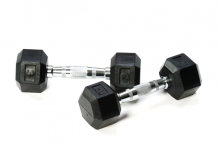
Based on the current medical condition, the current performance capacity and body composition, which should be scientifically determined beforehand, the training proportions can be tailored qualitatively and quantitatively to the goal. The adaptability of the musculature remains largely intact even into old age: when roughly 65-year-old men and women start progressive strength training, they can bring the average cross-sectional area of their type 2 muscle fibres up to the level of roughly 30-year-old untrained people within four months! To also train the very important neural aspects of movement competence, strength and endurance training should definitely be supplemented by further sporting leisure activities that promote proprioception (self-perception), coordination and balance. Dancing is particularly well suited for this. Finally, it is recommended to climb as many stairs as possible in daily life and, especially when going down, to initiate the force via the forefoot. In addition, single- and double-leg hopping exercises can be built into everyday life.
Protein as the optimal nutritional basis
Suitable nutritional measures potentiate the training effects. Older people in particular should make sure that the protein dose per intake and the time intervals between protein intakes are optimally matched, taking training into account. In this way the loss of muscle mass can be prevented, or the build-up of muscle mass through training can be promoted. It is recommended to discuss and optimise the entire nutrition plan with specialists, also regarding fat, carbohydrate and micronutrient intake (vitamins, minerals). In any case, the effect of strength training can be enhanced if protein is consumed immediately after training, as the muscle protein synthesis rate is then higher than with strength training alone.
A high-quality protein powder that dissolves perfectly in water, tastes good and is free of allergens and unnecessary additives is suitable for this (for example from Nutriathletic). The advantage clearly lies in the rapid availability of the amino acids, which reach their highest concentration in the blood 15 to 30 minutes after intake (for comparison: with meat consumption it takes approx. 100 minutes until the amino acid concentration in the blood reaches its maximum). For young people the optimal protein dose for maximum stimulation of muscle protein synthesis after training is on average just under 20 grams. For older people this amount is closer to 30 grams.
Source: Text: Dr. sc. nat. Marco Toigo
