Fat doesn't make you fat! The essentials about fat
What is fat anyway?
Fat has an energy density of 38 kJ/g. This corresponds to 9 kcal/g. As a result, fat is the most important energy supplier and carrier. Dietary fat consists mainly of triacylglycerols and cholesterol. Fat is not water-soluble. Triacylglycerols serve as storage fat. The storage fat acts as a depot in the body. It is also contained in vegetable oil or can be seen in pieces of meat.
Each fat molecule is structured by a different fatty acid composition. Fatty acids can be divided into short-, medium- and long-chain fatty acids based on the length of the carbon chain. A distinction is also made based on the number of double bonds in the fatty acid chain between saturated fatty acids (no double bond, e.g. stearic acid and palmitic acid) and mono- or polyunsaturated fatty acids (one, e.g. oleic acid, or several, e.g. linoleic acid double bonds). The more double bonds there are, the more reactive the fat is, since not all binding possibilities are used. This is also the reason why fats with a lot of unsaturated fatty acids spoil faster than saturated ones.
Saturated fatty acids are also often supplied to the body through food. If they are not supplied, they can be formed by the body itself. A high intake of saturated fatty acids can worsen blood lipid levels and promote vascular diseases.
Trans fatty acids are synthetically produced fatty acids that do not occur naturally. They have an even greater negative potential than saturated fatty acids.
The essential fatty acids
Some of the polyunsaturated fatty acids cannot be produced by the human organism itself. These fatty acids are therefore essential and must be taken in with food. Examples are linoleic acid and eicosapentaenoic acid (EPA) as well as docosahexaenoic acid (DHA) or its precursor alpha-linolenic acid. From these fatty acids, the body can produce so-called tissue hormones. These are mediators with diverse effects, including on blood pressure, hormone balance, inflammatory processes, the immune system, platelet clumping and the circulatory system.
Where does fat occur?
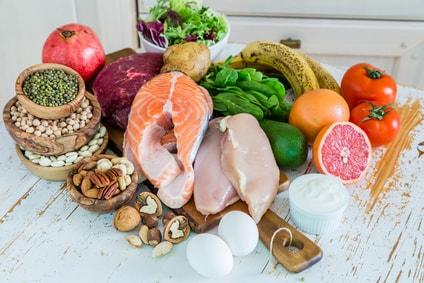
The biggest sources of fat are dairy products, margarine, meat and oils. Fats often also occur hidden in foods, such as in sweets.
Fat should not be judged by its origin (e.g. animal fat is healthy, vegetable fat is unhealthy). The assessment should be made based on the fatty acids it contains and the saturation of the individual fatty acids. Fats can also be classified by their state. Oils are liquid, for example, butter is semi-solid and tallow is solid. In general, therefore: liquid fats have a high proportion of short-chain and unsaturated fatty acids. Solid fats, on the other hand, have a large proportion of long-chain and saturated fatty acids. Fats can also be distinguished from the perspective of processing. Natural fats, such as cold-pressed oils from thistles or olives, and processed dietary fats such as hardened fats (e.g. coconut fat).
Digestion and absorption of fat in the body
Large amounts of triacylglycerols are only digested in the small intestine. The enzymes of the pancreas split the fats until, finally, individual fatty acids and residual parts of the fats are ready for absorption. Long-chain fatty acids and free dietary cholesterol are absorbed into the intestinal cells with the help of bile acids. Triacylglycerols are produced there from individual fragments, which are then released into the blood via the lymph, packaged together with cholesterol as so-called lipoproteins, and finally transported to the liver. Water-insoluble fats must be packaged in a water-soluble shell of proteins for transport in the blood.
The function of fat
Fatty acids and fat perform a great many tasks in the body. For example, body fat serves as an energy reserve and energy supplier. Fats can be stored in unlimited amounts. The fat-soluble vitamins A, D, E and K are also contained in fat. Flavour and aroma substances are also found in it.
Overview of the functions of fat:
- Body fat is subject to constant breakdown and rebuilding. Depending on their filling state, the fat cells form signalling and messenger substances (e.g. leptin). These messenger substances have an effect on the entire metabolism. If the fat content in the body is high, more adipokines are released. These can have unfavourable effects on the body (such as an increased tendency to inflammation and high insulin levels).
- Organ fat serves to cushion and fix the organs.
- The cell walls in the body contain fatty acids. Fatty acids also carry out countless functions in energy and immune metabolism.
- In white adipose tissue: depot or storage fat as well as essential structural fat (e.g. brain, kidney bed)
- Brown fat serves to regulate heat (only a small proportion, usually located between the shoulder blades and near the aorta in the chest).
- Fat serves to absorb fat-soluble vitamins (A, D, E, K, provitamin carotene) as well as aroma and flavour substances.
How much fat should be consumed?
A healthy adult should consume about 1 g of fat per kg of body mass each day. This is to ensure that enough essential fatty acids vital to life are taken in. Not consuming any fat over a longer period leads to life-threatening complications.
For physically active people, the daily fat intake should be 1 to 3 g per kg of body mass. With extreme endurance exertion, it can be even higher.
About 10% of the total energy intake consists of long-chain saturated fatty acids and trans fatty acids. This corresponds to roughly a third of the fat intake. About 7% consists of polyunsaturated fatty acids (with a ratio of n-6 to n-3 fatty acids of at most 5 to 1), and the remaining 10 to 15% consists of monounsaturated fatty acids.
To take the recommendations on fatty acids into account, it is simple and sensible to follow the food pyramid.
You can find high-quality omega-3 fatty acids here.