
Methods for Determining Body Composition
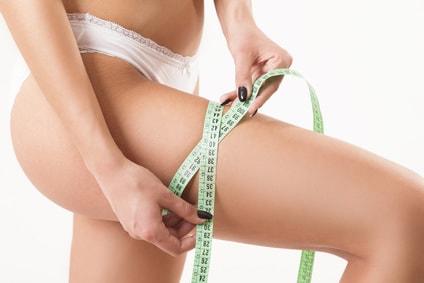
Body composition.
What is body composition and how can it be measured?
In Switzerland, around 30% of people are overweight, and around a further 8% are obese (a pathological increase in body fat). Children who are overweight are therefore highly likely to be overweight or even obese as adults.
There are various ways to assess whether someone is overweight, underweight or a normal weight. Several factors play a major role, such as height, sex and body composition.
Methods for assessing the body
The following methods are useful for assessing the body's weight relatively simply.
The Body Mass Index (BMI)
The Body Mass Index (BMI) shows the relationship between height and body weight (Table 1).
The BMI is calculated as follows: BMI = body weight in [kg] : height 2 [m 2]
BMI classification


The following should be noted when assessing the BMI:
- Children cannot yet be assessed using the same classification
- According to the BMI classification, bodybuilders would be overweight, even though their percentage body fat tends to be too low (muscle mass is heavier than fat mass)
- There are women with a BMI of 20 who still have almost 40% body fat
Waist circumference
Visceral fat build-up (in the abdominal area) carries a greater health risk than fat build-up around the hips. This visceral fat produces particularly large amounts of fatty acids, which are converted into other fats in the liver. As internal abdominal fat increases, the risk of secondary conditions therefore also rises, and in particular the following conditions and symptoms occur more frequently: heart attack, high blood pressure, stroke, diabetes mellitus, cancer and Alzheimer's.
Visceral fat build-up is usually found in men, and this pattern is also called an "apple shape". Women, on the other hand, tend to have a hip-focused fat build-up, known as a "pear shape". The proportion of visceral fat increases with age.
Measuring waist circumference can therefore show and help assess the extent of any increased visceral fat build-up.
Assessing waist circumference

The Waist-to-Hip Ratio
Another way to assess the body is via the ratio of waist (or abdominal) circumference to hip circumference. This is therefore called the WHR (Waist to Hip Ratio).
It is calculated as: WHR = waist circumference [cm] : hip circumference [cm]
This ratio answers the question of where the fat deposits are located (hips or abdominal area)
Assessing the WHR

Determining body composition
Measuring body composition allows you to determine the proportions of fat, muscle and water in the body. Body composition depends on both sex and age.
Body fat
The total amount of body fat depends on sex and age. Body fat mass increases with age.
Body fat cannot be determined absolutely, the way weight can, so there are "only" guide values. You should therefore always use the same method and the same device for repeat measurements.

There are people with a body fat percentage below the "normal" values who are still in good health. For example, professional athletes up to the age of 30 usually have a body fat percentage of around 8-12%. The body fat percentage of a male professional bodybuilder is around 5% or just below during competition season. A body fat percentage of between 2% and 5% is considered essential for life in men, and between 10% and 13% in women.
The measurement methods for determining body composition.
There are many different methods for determining body composition. Some of these methods are described below.
Hydrostatic weighing
With hydrostatic weighing, the whole body is submerged in water, and both the body weight underwater and the volume of water displaced are measured. These values can then be used to calculate the percentage of body fat. Lung volume still has to be subtracted (1-1.5 litres). To determine the percentage of body fat, you therefore calculate (495/body density) - 450.
For the calculation: body density = body weight : body volume
Points to note:
- diet affects the measurement (e.g. beans), so it's best not to eat or drink anything for several hours before the measurement
- an accurate measurement is very time-consuming
- "only" body fat is determined, not the proportion of muscle mass.
- the measurement is very accurate
Example: Max is 1.88 m tall, weighs 93 kg, and his underwater weight is 5 kg
| Volume | = body weight - underwater weight | = 93 kg - 5 kg | = 88 kg |
| corrected volume | = volume - lung volume | = 88 kg - 1.5 kg | = 86.5 kg |
| Density | = weight : corrected volume | = 93 kg : 86.5 kg | = 1.075 |
| relative fat percentage | = 495 : density - 450 | = 495 : 1.075 – 450 | = 10.4 % |
| Fat mass | = weight x relative fat percentage : 100 | = 93 kg x 10.4 : 100 | = 9.7 kg |
Infrared light
With the infrared method, infrared light is directed into the body, and the body fat percentage is calculated from the different reflections off muscle and fat tissue. The radiation dose is low.
Points to note:
- a normal fluid balance is a prerequisite
- there are various methods of interpretation
- measuring with infrared light is very simple and quick to use, but not very reliable
Skinfold callipers
This is the skinfold measurement, in which skin thickness is measured at specific points on the body. At each point, the skinfold should be measured three times. The body fat percentage is then calculated using a conversion table (standard values).
Points to note:
- the result depends heavily on the person taking the measurement (so the same person and the same method should always be used for repeat measurements)
- "only" subcutaneous fat is assessed
- the heavier someone is, the less accurate the measurement becomes
Bioelectrical Impedance Analysis (BIA)
With Bioelectrical Impedance Analysis (BIA), a small alternating current (0.8 mA at a frequency of 50 kHz) is passed through the body, measuring the body's resistance (impedance, Z). Electrodes are attached to the hands and feet. The interpretation is based on how the body behaves as a conductor. Fat conducts poorly (no water), while muscle conducts well (contains a lot of water, up to 74%).
The measurement determines 2 values at once (R and Xc), which reflect different biological properties:
- R: resistance analyses the body's fluid status
- Xc: the sum of all membrane capacitances gives an indication of the quantity of body cell mass and the quality of the body cells
- Healthy cell systems, with their intact cell membranes, produce a high capacitive resistance Xc. High Xc values indicate intact energetic states within the cell, in other words a good nutritional status.
- pA (= phase angle) indicates the ratio between the two resistances (R and Xc). The higher the share of Xc in the total resistance, the greater the phase angle. Healthy, well-nourished, athletic and well-muscled bodies are characterised by a large phase angle.
Points to note:
- the positioning of the electrodes for this "internal" measurement path must be followed precisely for a valid and reproducible BIA measurement
- the BIA measurement should not be carried out after a sauna, since electrolyte levels play a role, and dehydration produces values that are too low
- high body temperature also affects the result (the higher the body temperature, the lower the fat reading)
- ideally, the measurement is taken in the morning on an empty stomach
Dual-Energy X-ray Absorptiometry (DEXA) - measurement
While conventional digital X-ray methods use just one X-ray source, DEXA scanning uses two X-ray sources with slightly different energy levels at the same time. This makes it possible to distinguish between and compare the different tissue types (bone, muscle and fat tissue). What makes this method special is that the composition of each individual body region is analysed. This measurement method is very precise but relatively expensive.
A scan costs around CHF 200. However, this method of measuring body composition is the gold standard in science and delivers by far the best results.
If you want to measure your body composition, we recommend looking for a provider who offers a DEXA scan. Otherwise, it makes the most sense to track changes in your body composition by how you look in the mirror and how you feel.Sources: Gallagher et al., American Journal of Clinical Nutrition, Vol. 72, 09.2000
You'll find products that can help with successful fat loss here.
